Blog Details
Rebuilding Human Relationship with Snakes in Gaidahawa
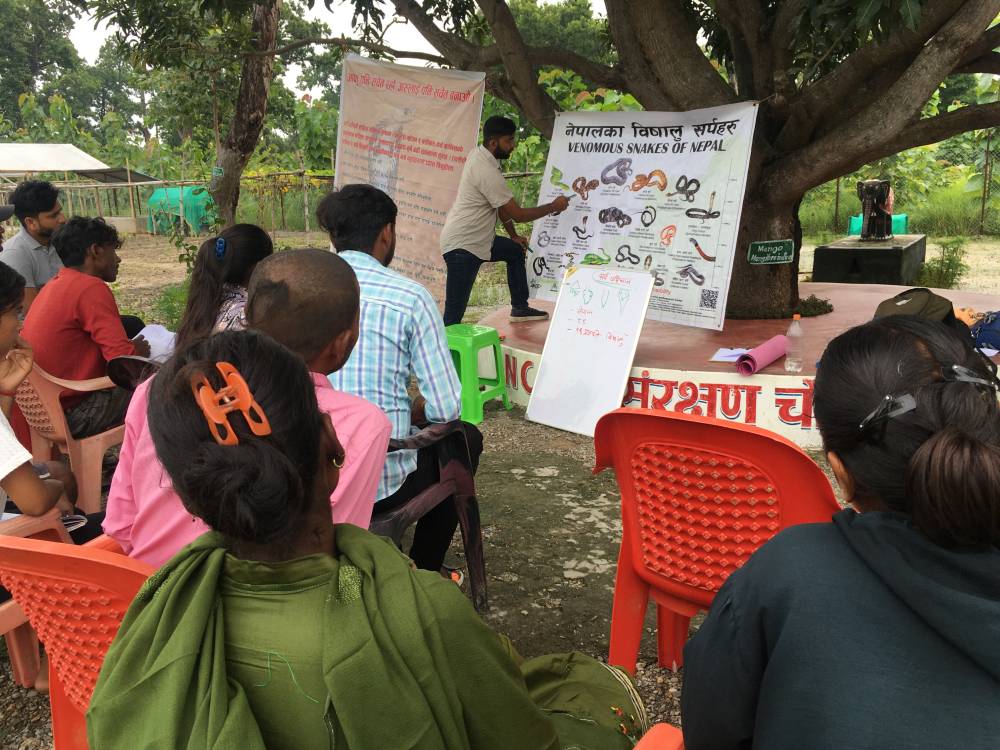
“Snakes? Aren’t they dangerous for human lives? Shouldn’t they be killed when encountered?” These are the common opinions we often hear about snakes. But, in reality, snakes, predators controlling rodent and pest populations, play a crucial role in maintaining the ecological complex. Their ecological role, however, is often overshadowed by snakebites, which take a toll on human lives. But do they really deserve death, just because being venomous is part of their nature? Nevertheless, what is more interesting is that although most people assume snakes as venomous, all of them certainly are not. To help distinguish the venomous and non-venomous snakes, shift local perceptions from killing to saving, and build snake-handling and rescue capacity at the community level, NCDC organized a one-day Snake Identification, Handling, and Awareness Programme at Gaidahawa Forest Nursery, Gaidahawa in Lumbini Province on September 18, 2025.
Two snake experts, Mr. Bishal Prasad Neupane and Mr. Basant Subedi delivered the training. The training was designed specifically for the field staff of “Forest Restoration Gaidahawa Project” as they are the frontline workers in conservation. Working long hours in forests and farmlands, snake encounters are most common for them. Villagers often look to them when panic strikes in the village. Equipping them with knowledge of snake identification, safe handling, rescue and first-aid techniques provided an opportunity to reshape the stereotypical dynamics of human-snake relationship. In an open learning environment, 15 staff along with 7 interested villagers learnt the basics of snake types, behaviours, habitats, handling, and even went out in a group herping in the nearby forest.
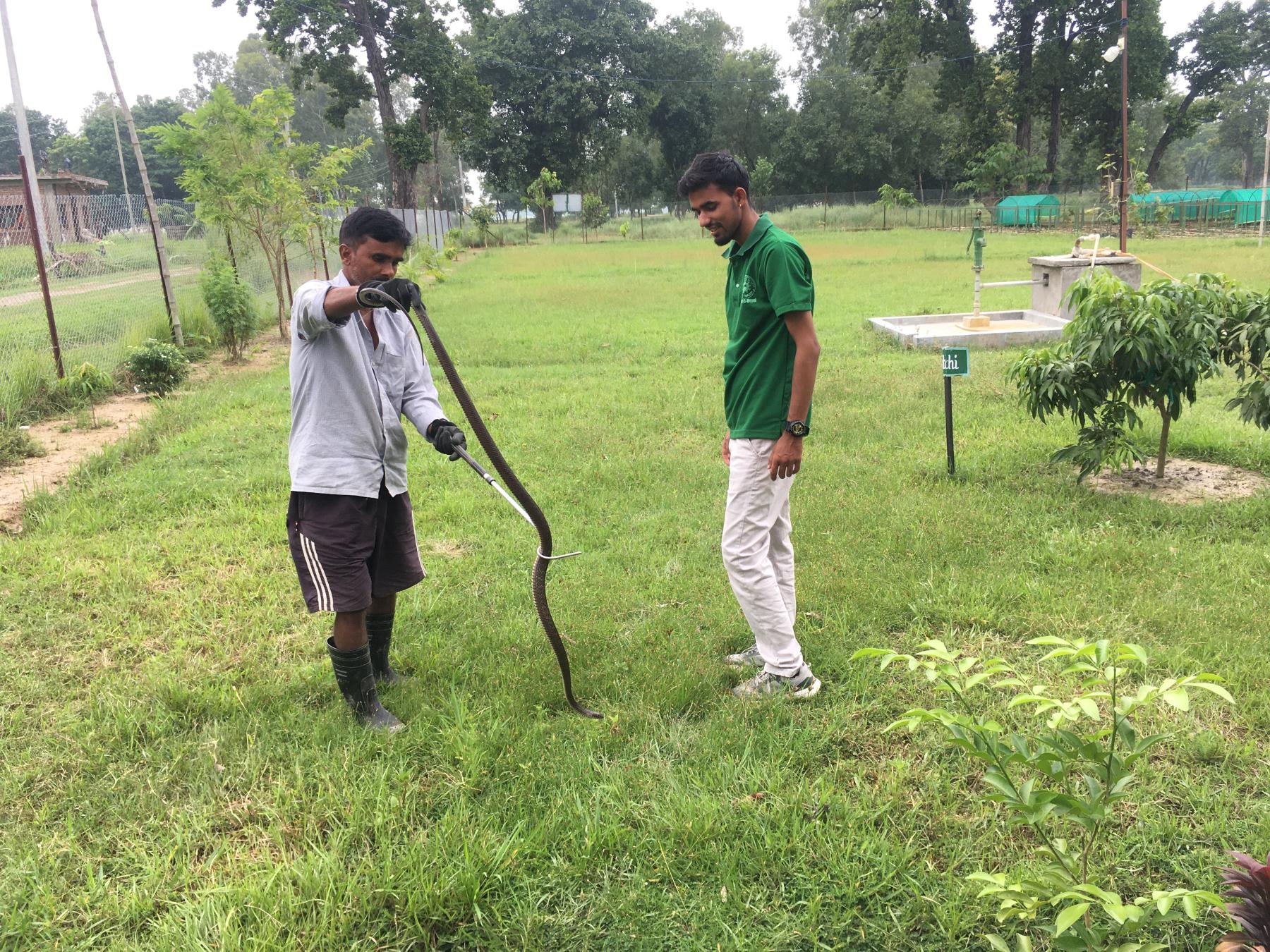
Fence technician handling a non-venomous snake under the supervision of trainer
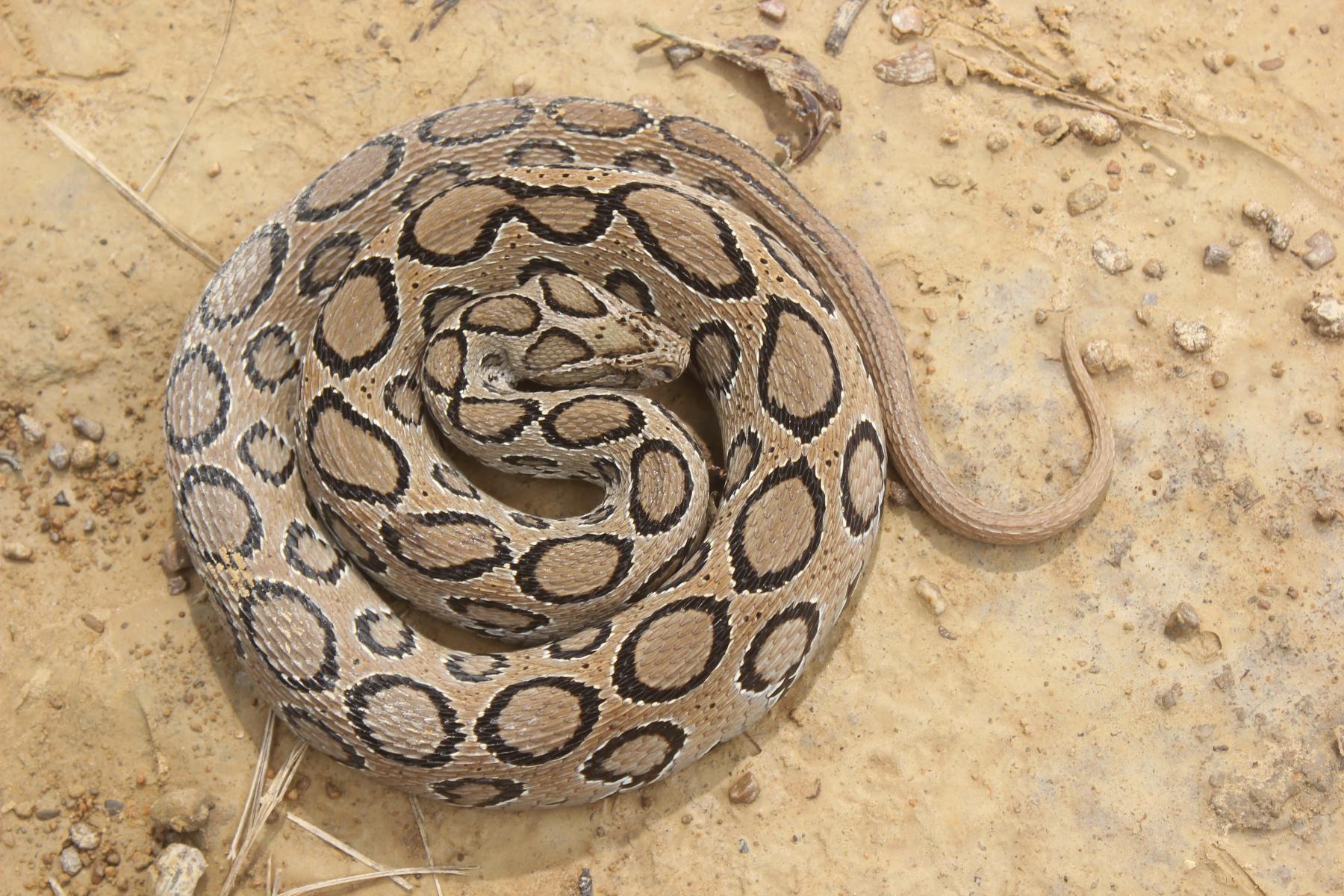
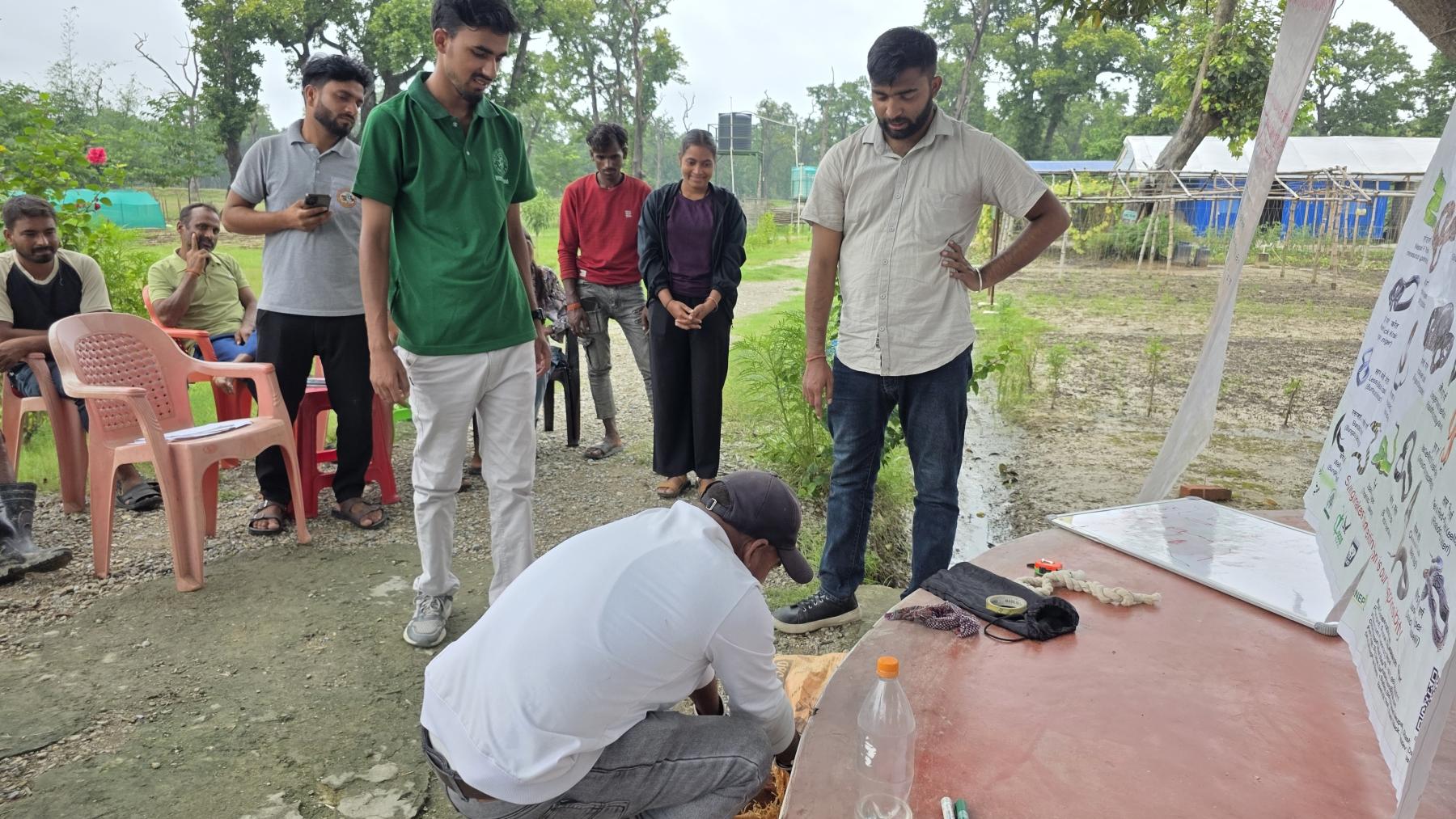
That day, even nature seemed to favour the training. First, it was the sight of a Russell’s Viper, one of the most venomous snakes of Nepal. Later, a non-venomous Rat Snake slithered by, which participants handled using equipment, such as snake hook. While the explored herpetofauna included Common Bullfrogs and Skittering Frogs, many more species that share the same habitat remain to be explored. The highlight of the event was the hands-on rescue session, particularly the “bag and pipe method”, where both the snake’s and rescuer’s safety are ensured.
By evening, the participants expressed that they observed a major shift in their perceptions. They no longer feared every snake they encountered. Krishna Pasi, the nursery naike of FRGP shared “I am now confident that we can coexist with snakes. Please provide me with the equipment, and I will handle and relocate snakes to a safe place. I will also teach others”. Through such initiatives, NCDC continues its effort in conservation of all beings and the landscape we share with others.
NCDC
You can connect with us
National Conservation and Development Centre (NCDC) is a non-governmental, non- political, non-profitable and autonomous organization, established in 2005.